Swiss Luxury Expert: Laopu Gold Is Following--and Rewriting--the Rules of Luxury
PR Newswire
BEIJING, Sept. 9, 2026
BEIJING, Sept. 9, 2026 /PRNewswire/ -- A news report from The Economic Observer: Chinese high-end brand Laopu Gold, through its conscious choice of branding, has become a key benchmark closely observed by overseas luxury researchers. Its robust performance growth, premium store locations, distinctive product portfolio and strong consumer popularity have made it a leading case for observing the value re-evaluation of high-end consumption.
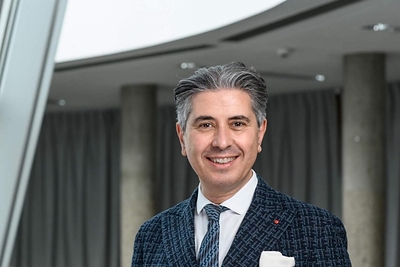
IMD is ranked among the world's top three business schools for executive education. Professor Stéphane JG Girod specializes in the global luxury industry, corporate strategic transformation and organizational innovation.
Professor Girod began to focus on Laopu Gold earlier this year, inspired by an industry report that shocked the European luxury sector: Laopu Gold's sales in the Chinese market in 2025 surpassed the jewellery business of the Richemont Group. This breakthrough made him realize that Chinese brands are redefining industry rules, with Laopu Gold serving as a typical example of challenging Western luxury houses through innovative business models and the integration of traditional craftsmanship and modern design.
Professor Girod conducted dedicated research on Laopu Gold recently. Taking the brand as a core case, he analyzed the unique brand value and development path of emerging Chinese luxury brands, as well as pivotal shifts taking place in high-end consumption.
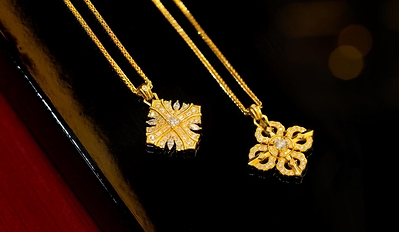
From Professor Girod's perspective, the most noteworthy strength of Laopu Gold lies in its integration of 100% solid gold (24K), a reinterpretation of Chinese ancestral aesthetics for contemporary lives, traditional craftsmanship, a new retail experience that breaks with standardized Western store design, and customized services, forming a unique luxury value proposition and systematic brand ecosystem.
For a long time, Western luxury brands have dominated China's high-end consumer market. International reputation, iconic logos, symbolic social status and long brand heritage were the core drivers of luxury consumption. Today, consumers are reconnecting with their own culture. They are shifting from pursuing widely recognized mainstream luxury brands to selecting products that align with their personal aesthetics and cultural roots. Modern consumers pay closer attention to material quality, craftsmanship and service standards. These are constants in luxury, and Laopu Gold adheres to these practices. Alongside its approach to retail design and collections, Laopu Gold pays particularly close attention to the authenticity of the value behind high-end pricing.
The considerations related to "value" matter greatly to the brand: many jewellery brands claim to create heirlooms that can be passed down through generations and retain their value over time. This is, by the way, currently driving the success of branded jewellery, which is one of the few categories to keep growing amid the overall global luxury downturn. But thanks to its choice of 24K gold (which creates its own headaches in terms of margin management for the brand), Laopu Gold offers greater long-term value and value-retention potential in product categories where Western brands tend to use 18K gold.
Laopu Gold perfectly embodies this market shift. Industry data shows that in 2025 and from January to June 2026, Laopu Gold consistently ranked first globally among luxury brands in both single-store sales efficiency and floor area efficiency. In the jewellery category, its performance was several times higher than that of other international jewellery brands. It is now the only Chinese brand to have entered the high jewellery segment of the luxury market.
This fundamental shift poses new challenges to international luxury brands. Professor Girod notes that over the past decade or more, many luxury brands achieved growth in the Chinese market through price hikes, expansion and high market exposure. However, these practices have led to brand dilution and a disconnect between pricing and actual product value. For increasingly sophisticated Chinese consumers, Western luxury symbolism is no longer sufficient. They are re-evaluating the essence of high-end consumption, focusing on superior quality, genuine product value, and innovation in cultural expression and service experience.
Interview with Professor Girod: Laopu Gold Is Far More Than Gold
Q: How do you view the ongoing changes in China's luxury market and consumer behaviour?
Professor Girod: Chinese consumers today have a wide range of choices, extending far beyond established Western luxury brands. A new generation of outstanding Chinese brands has emerged with highly innovative retail concepts. These brands revitalize and reshape traditional cultural heritage through modern products. Their store designs are sophisticated, integrating traditional Chinese cultural elements with contemporary, forward-looking aesthetics.
The Chinese luxury market has become increasingly diverse. Consumers are now more rational about their spending, carefully evaluating whether a purchase is worthwhile and what unique experience it can deliver. This creates enormous opportunities for emerging Chinese luxury brands. From my observations, Laopu Gold has successfully delivered unique value in this emerging market segment.
Sophisticated Chinese consumers are now paying for brand essence and styling rather than merely brand logos. They are no longer willing to pay premium prices blindly, requiring products to deliver authentic and substantial value. The functionality-quality-price equation that Chinese brands offer makes their value proposition very compelling.
Q: Against such market changes, why has Laopu Gold entered your research scope?
Professor Girod: Chinese consumers are increasingly drawn to innovative products that resonate with their cultural identity, and Laopu Gold precisely fulfils this demand. During my field research in China, I found that Laopu Gold operates a complete, mature brand system, featuring innovative retail experiences and differentiated product lines.
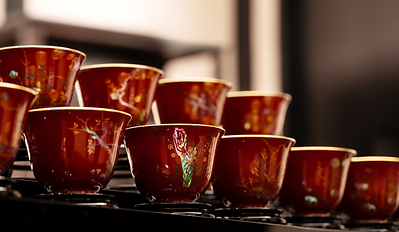
The brand boasts exceptional aesthetic standards. It interprets classic Chinese cultural symbols while creating contemporary artistic works for modern audiences. Its highly recognizable store design, modelled after Ming- and Song-style study rooms, delivers an immersive and refined retail experience that resonates deeply with mature consumers. I was struck by the tea ceremony in the
Laopu Gold features a multi-tiered product portfolio, covering daily wearable accessories and high-end artistic goldware. While conventional jewellery is purchased predominantly by women from the middle classes who buy for themselves, artistic goldware—including objects of virtu—attracts a large number of mature high-net-worth individuals. This is a product segment with distinct Chinese cultural characteristics and profound heritage that could resonate well with connoisseurs on international markets because the designs are universally attractive and chic. The brand's unique styling, market positioning and creative capabilities are fully reflected in its jewellery and goldware collections. This has deepened my understanding of China's luxury market and helps explain the brand's immense popularity among local consumers.
Q: How do you define Laopu Gold's high-end positioning? What differentiates it from other jewellery brands?
Professor Girod: Laopu Gold is engaged in long-term brand building that fully complies with core luxury industry principles. Its inherent creativity, profound cultural connections, premium materials and exquisite craftsmanship collectively deliver value that far exceeds the intrinsic value of gold itself. Notably, while some luxury brands are considering introducing less expensive materials, Laopu Gold remains focused on gold, a material of high intrinsic value. This is an important signal.
By adhering strictly to 24K pure gold without compromise or shortcut, but also by shifting from gold sold by the weight to fixed prices Laopu Gold has successfully built consumers' trust in its value proposition based on creativity even more than on the price of the metal. Both consumer excitement and trust are essential.
Q: Do you believe Laopu Gold already possesses some of the characteristics of a luxury brand? What direction might its future development take?
Professor Girod: There is no unified definition of luxury even within the industry. Some define luxury by scarcity, yet scarcity in the luxury sector is often artificially managed. In my definition, luxury represents a commitment to ultra-high quality and creativity, a promise that products will retain their value over time, and a foundation in the beauty of the product. I believe Laopu Gold meets these criteria. If anyone says that Laopu Gold is not a genuine luxury brand, then one could say that there are no luxury brands in China—or even in the world. Laopu Gold is not trying to mimic Western brands or to be a luxury brand anyway. Most of the brands I study in China eschew the label "luxury." They all have studied Western brands, they often admire them, but they all want to invent their own path towards a more "honest luxury" as I call it.
With solid foundations in creative design, refined craftsmanship and service experience, a diversified product portfolio, pricing discipline, and cultural inheritance, Laopu Gold has established important brand pillars that can support its development as a long-term player in the luxury sector rather than a brand focused only on short-term gains.
I study whether traditional Chinese craftsmanship and Eastern aesthetics can evolve into a global language of luxury. What I can already say is that Chinese brands will be able to internationalize because they are not simply concentrating on aesthetics; they are rethinking the business model too. Traditional luxury itself is in flux; my new book "Purposeful Luxury" (Wiley, September 17, 2026) shows that all luxury brands have to considerably adapt to stay legitimate in a world grappling with growing environmental pressures, social polarization and conflict. What is certain is that Laopu Gold has beautiful products, classic cultural elements, precious and distinctive materials and craftsmanship, and a carefully designed product portfolio. These strengths have already laid a solid foundation for entering international markets. If the brand opened a creatively designed store in Europe, would European consumers embrace it? I will explore this question further in my Research Report on Chinese Luxury Brands, scheduled for release on November 5, 2026.
 View original content to download multimedia:https://www.prnewswire.com/news-releases/swiss-luxury-expert-laopu-gold-is-followingand-rewritingthe-rules-of-luxury-302873277.html
SOURCE The Economic Observer

