Playful Pooch Nearly Dies After Snacking on Castor Bean Seeds
PR Newswire
MINNEAPOLIS, April 14, 2026
Before Planting That Spring Garden, Check for Potentially Deadly Selections
MINNEAPOLIS, April 14, 2026 /PRNewswire/ -- When River wants to get her family's attention, the Dutch Shepherd usually finds something close by to chew on to get noticed. When that item is a castor bean pod, however, it leads to a trip to the pet emergency hospital instead of playtime.
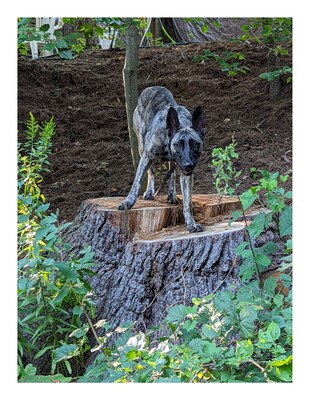
In honor of National Gardening Day on April 14, the toxicology experts at Pet Poison Helpline are warning pet lovers to take a careful look at their garden plant choices. They may be a gorgeous addition to your landscaping design, but some choices can be potentially poisonous to pets.
"Last summer I grew some beautiful castor bean plants in our front yard," explained Julie Hathaway, who lives with River and her husband Noah in Ontario, Canada. "I picked the front yard because I knew they were dangerous to pets, and I didn't want River to have access to them. They were so beautiful that I decided to harvest the seeds for planting this spring. I placed the seed pods on a shelf to dry and didn't think much more about it."
At some point, one of the castor bean pods got knocked on the floor and the Hathaways didn't pick it up immediately. After being on the floor for a couple of weeks, River eventually found the pod and ingested it along with the beans. The beans contain a highly toxic glycoprotein called ricin. When ingested, clinical signs include inappetence, drooling, abdominal pain, vomiting, severe bloody diarrhea, abdominal straining, weakness, trembling, hypotension (low blood pressure) and sudden collapse is seen. Liver injury may also develop. Death can occur with even a very small ingestion of the beans. When the Hathaways got home from work that day, they found River very lethargic.
"Shepherds are crazy, right," Noah Hathaway joked. "It was very out of character for her to be so lethargic and we had no idea why. Around 11 p.m. that night, she started vomiting. At 2 a.m., she rang the bell to go outside and when we checked on her, we found she had vomited extensively again, but now she had severe diarrhea."
The next morning there was new vomit throughout the house. That's when Julie Hathaway checked the security cameras and found footage of River eating the castor bean pod the day before. Even though River was nearly 60 pounds, there is enough toxin in just one bean to cause death if untreated. She called her husband, who had already left for work, to let him know they needed to take River to the hospital.
"By the time River arrived at London Regional Veterinary Emergency and Referral Hospital, it had been more than 21 hours since the initial ingestion of the castor beans," said Dr. Renee Schmid, a senior veterinary toxicologist and director of Veterinary Medicine at Pet Poison Helpline. "This plant has a very narrow margin of safety, and even a small amount ingested can result in severe poisoning and even death. Because the ingestion involved a dangerous toxin like ricin, the hospital team called our toxicology experts for advice."
When River arrived at the hospital, she was already showing severe signs of ricin poisoning. In addition to the vomiting and diarrhea she was already having at home, the hospital's medical team noted that River was mentally dull, hypothermic (low body temperature), and dehydrated. Our veterinary toxicologist who assisted River's medical team developed a plan for her care which included an antiemetic to help reduce her nausea, intravenous fluids for hydration, blood work to assess her electrolytes and for any organ damage, as well as medications to offer liver and gastrointestinal protection. Additional recommendations included monitoring River's vitals closely and to provide medications for seizure control if they occurred.
River's symptoms were getting worse, so when the initial hospital closed on Friday, River was transferred to Ontario Veterinary College at the University of Guelph. There, her treatments were intensified and included additional fluid therapy, gastrointestinal support due to severe bloody stools, antibiotics, liver protectant, antioxidants and pain control. She was released three days later and sent home with GI protectants and instructions for supportive care. Without the aggressive care and heroics provided by the veterinarians and nursing staff at London Regional and Ontario Veterinary College, River would likely not have survived.
"I thought I was going to lose her," Noah Hathaway admitted. "It was a terrible experience, and she's a very lucky dog. The medical support she received was amazing."
"River's case was not only dangerous because of the type of toxin ingested, but also because of the delay in her treatment." Dr. Schmid explained. "Her symptoms were so intense that it required heroic efforts by the medical team to save her. In contrast, we had another recent case where a four-month-old puppy named Radley ate a toxic azalea flower, which can result in gastrointestinal, cardiovascular and central nervous system signs with large ingestions. Because he was treated very quickly after ingestion, he developed no signs."
To help gardening and pet enthusiasts avoid some of the most dangerous plants, here's a list of the Top 5 Most Toxic Plants for Pets according to Pet Poison Helpline toxicologists:
"These Top 5 plants are not the most commonly ingested but are some of the most dangerous landscaping and garden plants," Dr. Schmid clarified. "If you have pets in and around your home, it is probably best to choose other options."
Pet Poison Helpline created Toxin Tails to educate the veterinary community and pet lovers on the many types of poisoning dangers facing pets, both in and out of the home. All the pets highlighted in Toxin Tails have been successfully treated for the poisoning and fully recovered.
About Pet Poison Helpline
Pet Poison Helpline®, your trusted source for toxicology and pet health advice in times of potential emergency, is available 24 hours, seven days a week for pet owners and veterinary professionals who require assistance treating a potentially poisoned pet. Per incident and subscription service options are available. We are an independent, nationally recognized animal poison control center triple licensed by the Boards of Veterinary Medicine, Medicine and Pharmacy providing unmatched professional leadership and expertise. Our veterinarians and board-certified toxicologists provide treatment advice for all species, including dogs, cats, birds, small mammals, large animals and exotic species. As the most cost-effective option for animal poison control care, Pet Poison Helpline's fee of $89 per incident includes follow-up consultations for the duration of the case. The company also offers pethelpline(SM) and pethelplinePRO(SM) subscription services directly to pet lovers. Based in Minneapolis, Pet Poison Helpline is available in North America by calling 800-213-6680. Additional information, including a chat feature for pet owners, can be found online at www.petpoisonhelpline.com.
Contact: Curtis Steinhoff
Pet Poison Helpline®
(602) 300-8466
csteinhoff@petpoisonhelpline.com

 View original content to download multimedia:https://www.prnewswire.com/news-releases/playful-pooch-nearly-dies-after-snacking-on-castor-bean-seeds-302741074.html
SOURCE Pet Poison Helpline

