Every mosquito has a type -- and you may not be it
PR Newswire
MIAMI, Aug. 7, 2026
Study debunks the "mosquito magnet" myth — and lays groundwork for next generation of repellents to fight dengue, Zika and West Nile
MIAMI, Aug. 7, 2026 /PRNewswire/ -- There is no such thing as a universal mosquito magnet.
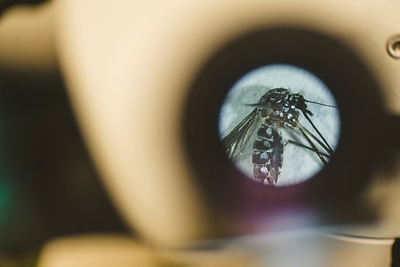
In a new study published in iScience, Florida International University (FIU) researchers pitted 119 human volunteers against three of the world's most dangerous mosquito species and found that not one person was attractive to all three. Every species had its own type. Attraction was largely driven by chemistry — an individual's body chemistry.
This single finding could reshape how the world fights mosquito-borne disease. Because each species decodes human scent differently, the results could help scientists develop next-generation, species-specific repellents.
"Isolating the components of human odor that attract or repel mosquitoes could lead to novel strategies to combat vector-borne diseases," said Matthew DeGennaro, a neurogeneticist who leads the research team and directs the Biomolecular Sciences Institute at FIU, Miami's state university.
The three species studied — Aedes aegypti, Aedes albopictus (Asian tiger mosquito) and Culex quinquefasciatus (southern house mosquito) — together spread yellow fever, dengue, Zika, West Nile and other diseases. The study, led by Ph.D. student Kaylee Marrero, is the first to directly compare how multiple mosquito species respond to the same people.
"We didn't expect the species to prefer different people when we started the study," Marrero said. "Each species having a distinct microbial signature that they use as a cue was so surprising to me."
Each species had a distinct set of turn-ons and turn-offs:
- Aedes aegypti preferred people wearing no added scent whose skin lacked certain volatile compounds. These daytime feeders showed a slight preference for men over women.
- Aedes albopictus (Asian tiger) was drawn to elevated ketones and plant-like volatile compounds naturally secreted by skin. Like Aedes aegypti, it feeds during the day.
- Culex quinquefasciatus (southern house) fed after dark and keyed in on the skin microbiome — the microscopic ecosystem of bacteria, fungi and microbes naturally living on people's skin. Some bacterial families were a green light to feed; others drove the mosquitoes away.
Human scent is a complex space of more than 1,000 volatile organic compounds, many still uncharacterized. Rather than agreeing on who was most attractive, each species consistently favored a different subset of people — evidence that the species have evolved distinct ways of sensing humans. Alongside the preference tests, the team collected odor and microbiome samples to identify which compounds and bacteria were present, and at what levels.
"This connected so well with the differences in skin bacteria and odors," DeGennaro said. "It is clear to me now that our skin microbiomes define our human odor signature. Each species found its own way to decode that signature."
By mapping these species-specific chemical cues, the FIU team is laying the groundwork for repellents and public health strategies tailored to the mosquito that matters most in a given region.
Photos and videos for media use are available via Dropbox.
Media Contact:
JoAnn Adkins
305-348-0398
jadkins@fiu.edu
news.fiu.edu
@FIU

 View original content to download multimedia:https://www.prnewswire.com/news-releases/every-mosquito-has-a-type--and-you-may-not-be-it-302846300.html
SOURCE Florida International University

