Disrupting College Sports: Michael Schreiber Says Athletic Departments Need a Business Model
PR Newswire
TAMPA BAY, Fla., Oct. 22, 2026
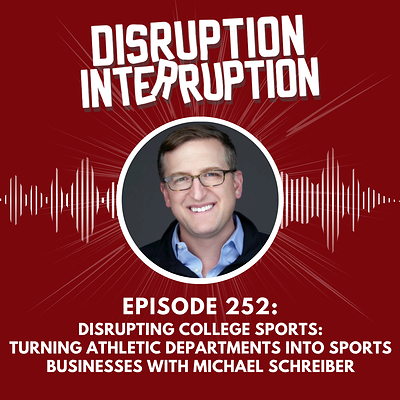
On Disruption Interruption, Michael Schreiber, Venture Partner at SeventySix Capital and Founder and Executive Chairman of Playfly Sports, explains why college athletic departments are being pushed to operate more like sports businesses and how schools can turn massive fan demand into revenue.
TAMPA BAY, Fla., Oct. 22, 2026 /PRNewswire/ -- The U.S. Senate passed the bipartisan Protect College Sports Act 77-22 on September 28, sending legislation that would establish national rules around athlete compensation, transfers, and other areas of college athletics to the House. National Collegiate Athletic Association (NCAA) data show the financial scale of the industry: Division I athletic departments reported nearly $20.5 billion in revenue and more than $20.8 billion in expenses in 2024. Michael Schreiber, Venture Partner at SeventySix Capital and Founder and Executive Chairman of Playfly Sports, joins host Karla Jo Helms (KJ) on the Disruption Interruption Podcast to question the business infrastructure around college athletics. "A lot of elements, from a commercial perspective, weren't caught up to where they should be in terms of the size of the fandom," Schreiber says.
College Fandom Is Outpacing the Revenue Model
Schreiber points to sponsorship revenue as one example. He says a large college athletics program might historically generate about $15 million a year in sponsorship revenue, compared with roughly $70 million for an average National Football League (NFL) team, despite major college programs drawing large audiences and filling stadiums with more than 100,000 fans. "They're not commercializing that inventory the way that an NFL team is," Schreiber says.
At the same time, changes around Name, Image and Likeness (NIL) have created new ways for athletes to earn money, while changes to transfer rules have given athletes greater mobility. Schreiber argues that together, those developments have increased competition for talent. "It's just a little bit chaotic in the marketplace right now," he says.
Facilities also add financial pressure. Training centers, weight rooms, practice facilities, and other amenities have become recruiting tools as schools compete for athletes. Those investments require capital while programs also absorb new athlete-related costs. "That has created a need for more capital," Schreiber says.
Turning Athletic Departments Into Sports Businesses
Finding that capital increasingly depends on treating athletics as a revenue-producing business rather than only a university function. Schreiber founded Playfly Sports to address the commercial gap he saw in college athletics, including sponsorships, ticketing, events, and other revenue streams. "That comes from turning your athletic department, which is a department of the university, into a sports business," he says.
He points to the early years of NIL as an example of how quickly commercial strategy can affect competition. Schreiber cites Florida Atlantic University and San Diego State University, which reached the 2023 men's Final Four, as examples of programs outside the traditional group of basketball powerhouses that moved quickly in the new environment. He says smaller programs found ways to connect athletes with brands and marketing opportunities before many larger schools adapted. "Each time there's a rule change, each time there's a change in the ecosystem, someone is going to hop in and take advantage," Schreiber says.
The long-term business case rests on something college athletics already has: deeply rooted fan loyalty. Commercial models may change, but the relationship between fans and their teams can last for decades. "If anybody is looking to get into an industry, or to invest in an industry, invest in sports," Schreiber says. "It's forever."
Links
Disrupting College Sports: Turning Athletic Departments Into Sports Businesses with Michael Schreiber
Disruption Interruption is the podcast where you will hear from today's biggest Industry Disruptors. Learn what motivated them to bring about innovation and how they overcame opposition to adoption.
LinkedIn: http://www.linkedin.com/in/michael-schreiber-4b262a1
Playfly Sports: https://www.playfly.com/
About Disruption Interruption™
Disruption is happening on an unprecedented scale, impacting all manner of industries — MedTech, Finance, IT, eCommerce, shipping, logistics, and more — and COVID has moved their timelines up a full decade or more. But WHO are these disruptors and when did they say, "THAT'S IT! I'VE HAD IT!"? Time to Disrupt and Interrupt with host Karla Jo "KJ" Helms, veteran communications disruptor. KJ interviews bad asses who are disrupting their industries and altering economic networks that have become antiquated with an establishment resistant to progress. She delves into uncovering secrets from industry rebels and quiet revolutionaries that uncover common traits — and not-so-common — that are changing our economic markets… and lives. Visit the world's key pioneers that persist to success, despite arrows in their backs at www.disruption-interruption.com.
About Michael Schreiber
Michael Schreiber is a Venture Partner at SeventySix Capital and Founder and Executive Chairman of Playfly Sports, which he founded in 2020. He previously served as Playfly's CEO and has held leadership roles at Altice USA, NBCUniversal, and Comcast. Earlier in his career, Schreiber was involved in the development and launch of Hulu and in digital distribution relationships with companies including Netflix, Amazon, and Apple.
About Karla Jo Helms
Karla Jo Helms is the Chief Evangelist and Anti-PR® Strategist for JOTO PR Disruptors™. Karla Jo learned firsthand how unforgiving business can be when millions of dollars are on the line — and how the control of public opinion often determines whether one company is happily chosen, or another is brutally rejected. Being an alumnus of crisis management, Karla Jo has worked with litigation attorneys, private investigators, and the media to help restore companies of goodwill into the good graces of public opinion — Karla Jo operates on the ethic of getting it right the first time, not relying on second chances and doing what it takes to excel. Helms speaks globally on public relations, how the PR industry itself has lost its way, and how, in the right hands, corporations can harness the power of Anti-PR to drive markets and impact market perception.
References
- National Collegiate Athletic Association. (2025, December). Division I athletics finances: 10-year trends from 2015 to 2024. ncaaorg.s3.amazonaws.com/research/Finances/2025D1RES_DI-RevExpReport_Final.pdf
- U.S. Senate. (2026, September 28). U.S. Senate roll call votes, 119th Congress, 2nd session: Vote no. 250. senate.gov/legislative/LIS/roll_call_votes/vote1192/vote_119_2_00250.htm
Media Inquiries:
Karla Jo Helms
JOTO PR™
727-777-4629
 View original content to download multimedia:https://www.prnewswire.com/news-releases/disrupting-college-sports-michael-schreiber-says-athletic-departments-need-a-business-model-302917245.html
SOURCE Disruption Interruption

